
Sheltered channels, short legs between islands and a crew that watches the weather. An honest look at safety on a crewed yacht in Croatia, from the Bura and Jugo winds to seasickness.
Is it safe to sail around Croatia? If you have never spent a week living on a boat, agreeing to a sailing holiday can feel like a leap of faith. Usually one person in the couple or group is already sold on island hopping along the Croatian coast, while the other is quietly wondering what happens if the sea gets rough, someone feels seasick or the weather turns in the middle of nowhere.
Those are fair questions. Being out on open water is different from staying in a coastal hotel, and pretending that the sea is always flat calm does not help anyone feel confident about booking a trip.
To give you a straight picture of what a week on the Adriatic feels like, it helps to look at the geography of the Croatian coast, the local winds and what happens behind the scenes on a professionally crewed yacht.
The Short Answer
Yes, it is safe to sail around Croatia, especially on a professionally crewed yacht rather than a bareboat charter where you skipper the boat yourself.
The Croatian Adriatic is one of the most sheltered cruising grounds in the Mediterranean. Unlike ocean sailing, where you cross hundreds of miles of open water out of sight of land, cruising in Dalmatia means moving between islands that sit a few miles apart. You are rarely far from a protected bay, a stone harbour or calm waters behind an island.
Still, the sea is a natural environment and the weather does change. Strong winds can blow through the channels even in the middle of summer. What makes a private charter safe is not that bad weather never happens, but that an experienced crew reads the conditions early and adjusts the plan before you ever feel uncomfortable.
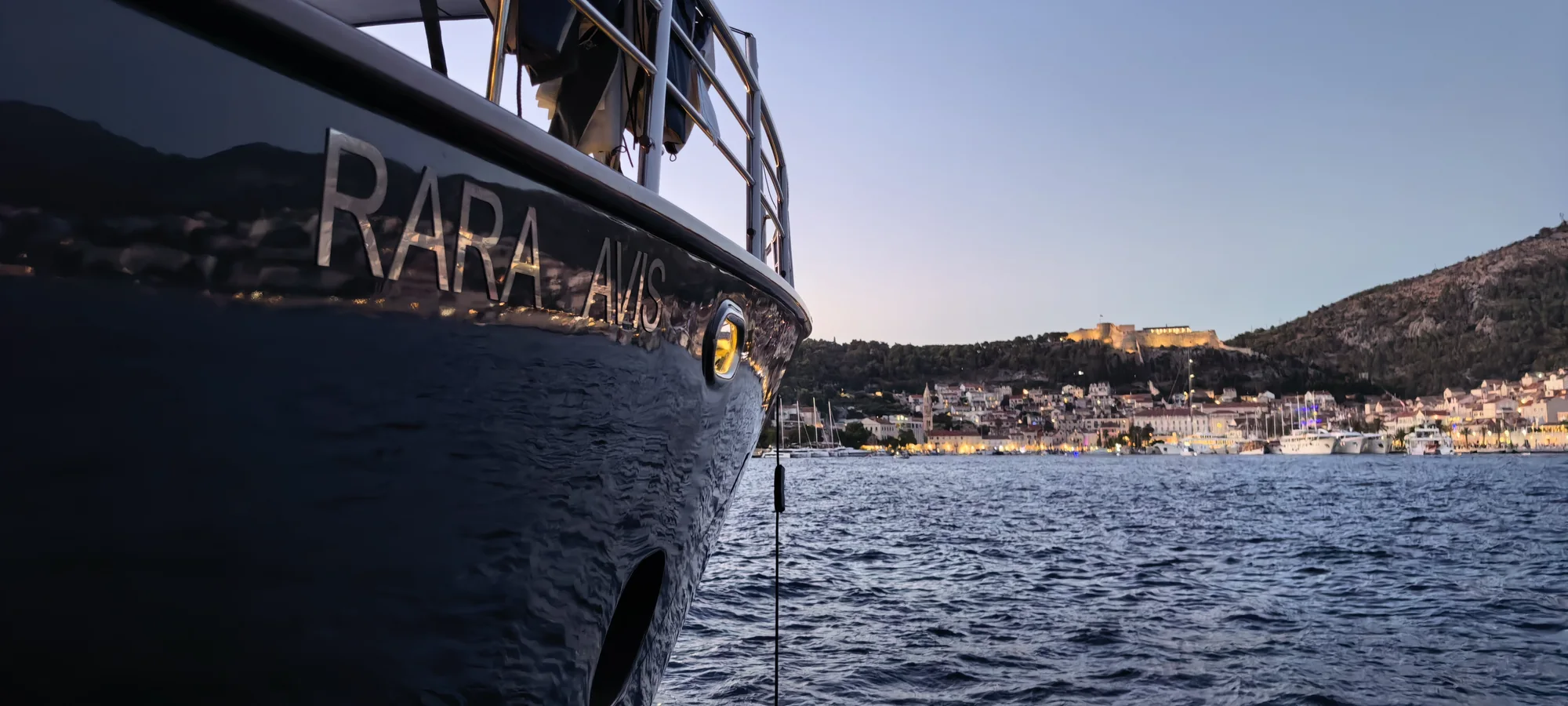
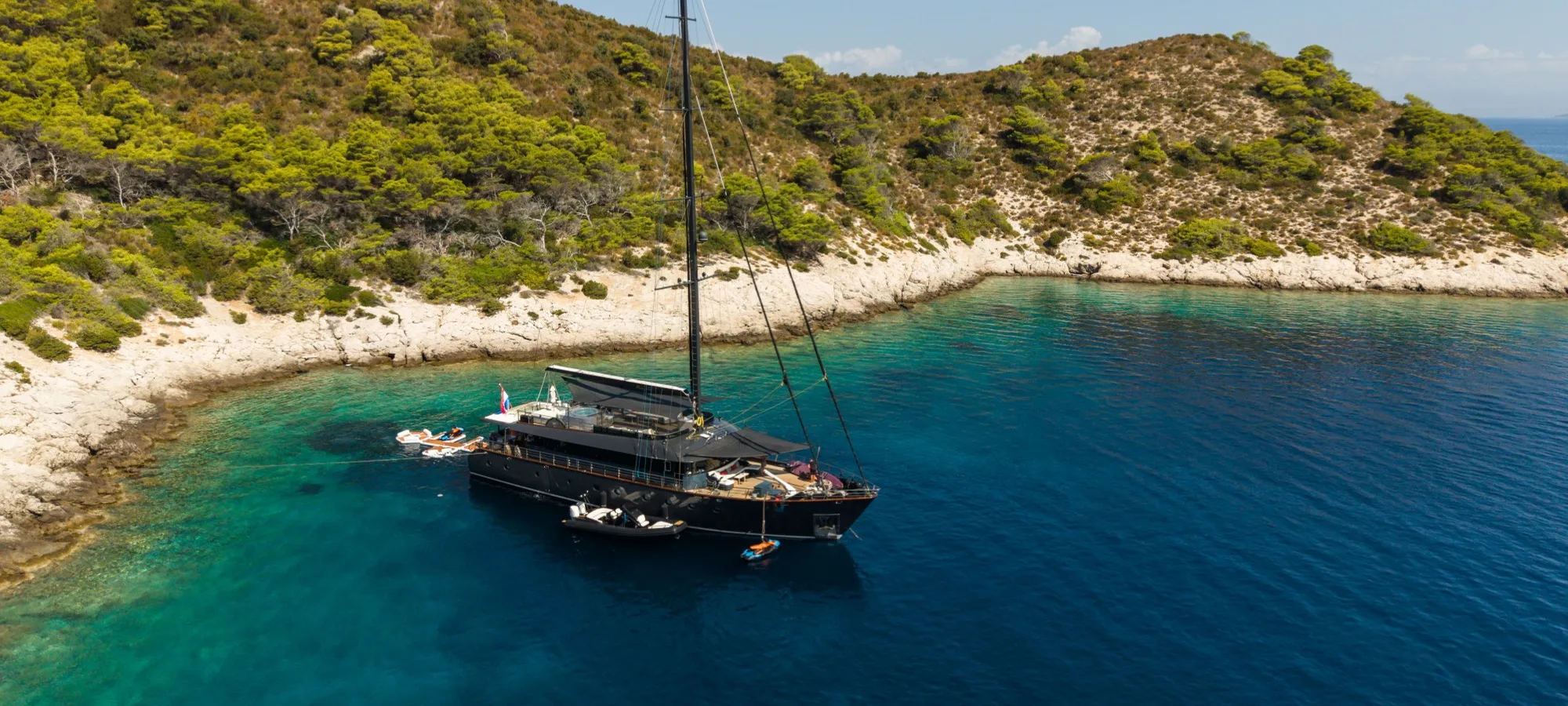
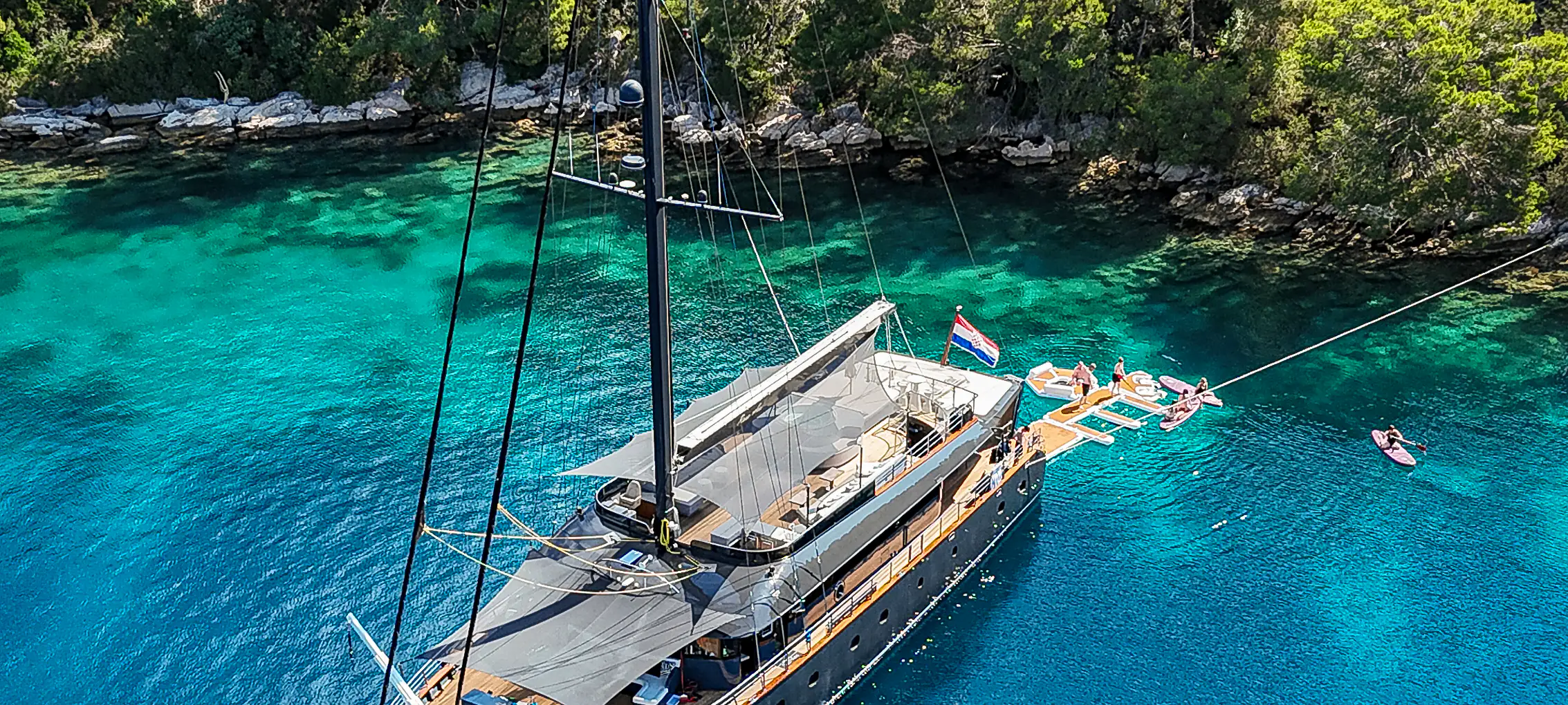
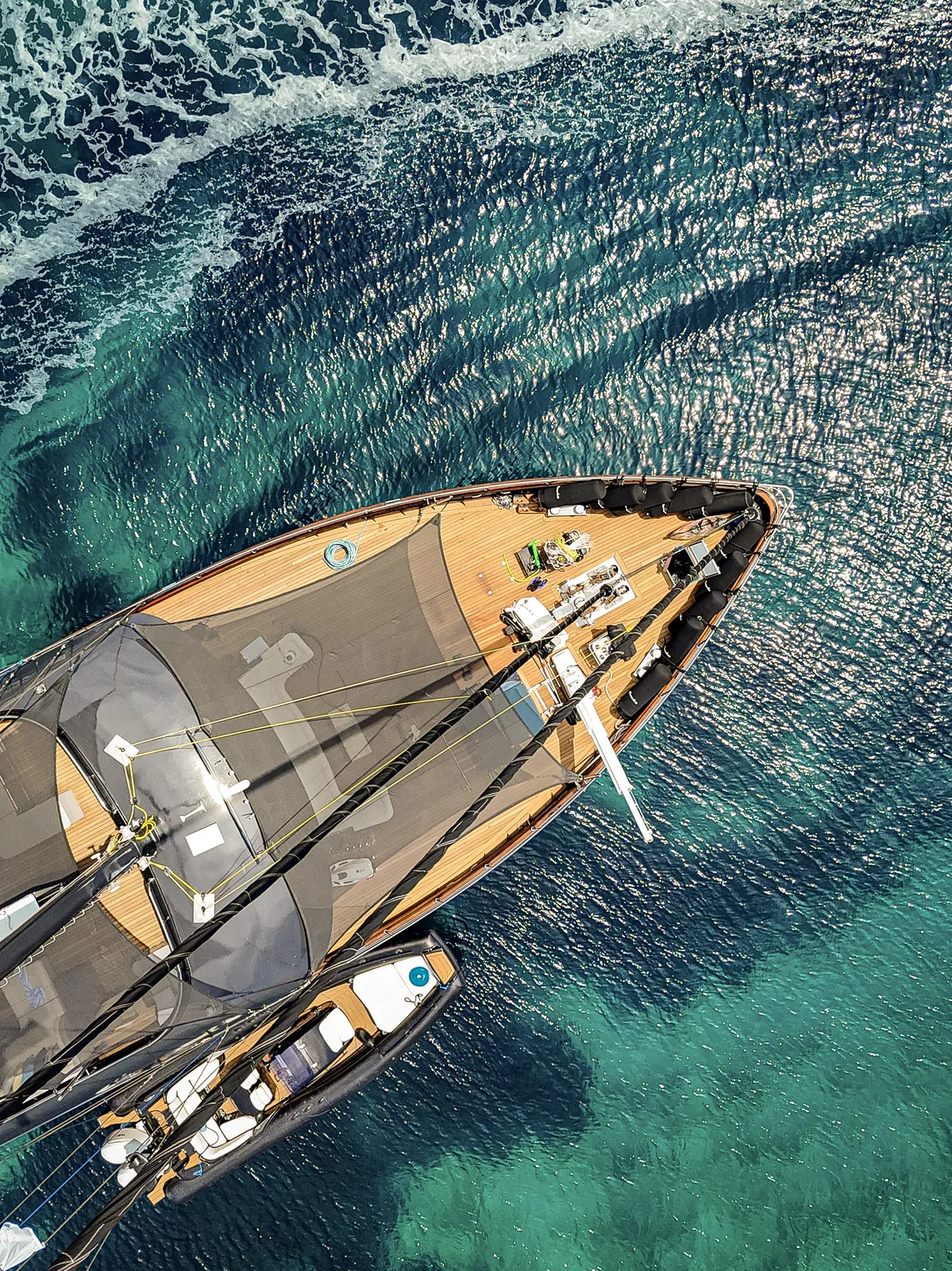
Rara Avis is a 37 metre luxury sailing yacht with a steel hull built in 2018, designed for commercial cruising. Her captain has more than twenty years at sea, so you are never guessing what the weather will do next or where to anchor when the wind shifts.
What Actually Makes the Adriatic Forgiving
When people picture sailing, they often imagine a small boat tilting in huge open ocean swells, hours away from the nearest port. Cruising the Croatian coast is very different, largely because of how the coastline is shaped.
Sheltered channels instead of open ocean
Croatia has more than a thousand islands, islets and reefs running parallel to the mainland. Instead of a wide open sea, these islands act like a natural series of breakwaters. As you move from Split south toward Hvar, Vis, Korčula and Mljet, you travel through sheltered channels rather than exposed ocean water. Large swells rarely build up between the islands, so the ride is noticeably calmer and steadier than most first timers expect. These are easy waters for a first trip.
A few crossings, such as the run out to Vis or Lastovo, are longer and more open. The captain chooses the day and the hour for those with the forecast in front of them.
Land is almost always in sight
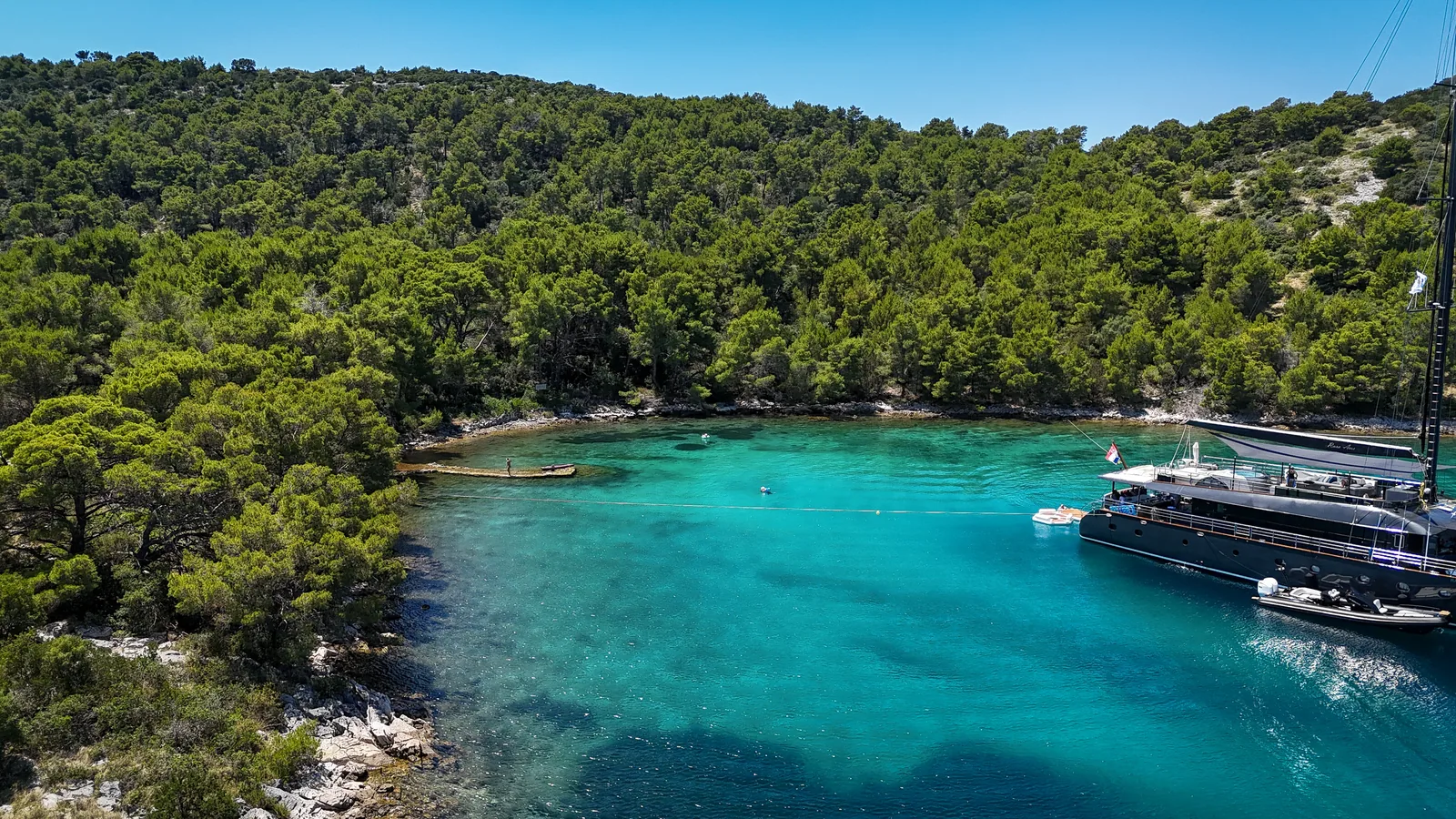
Another thing that puts newcomers at ease is that land is almost always in front of you. From the deck of the yacht you can usually see the island you just left, the island you are heading toward and two or three others off to the sides. Knowing that a quiet bay, a stone pier or a sheltered anchorage is rarely far away removes the feeling of being stranded at sea.
Short legs, long swims
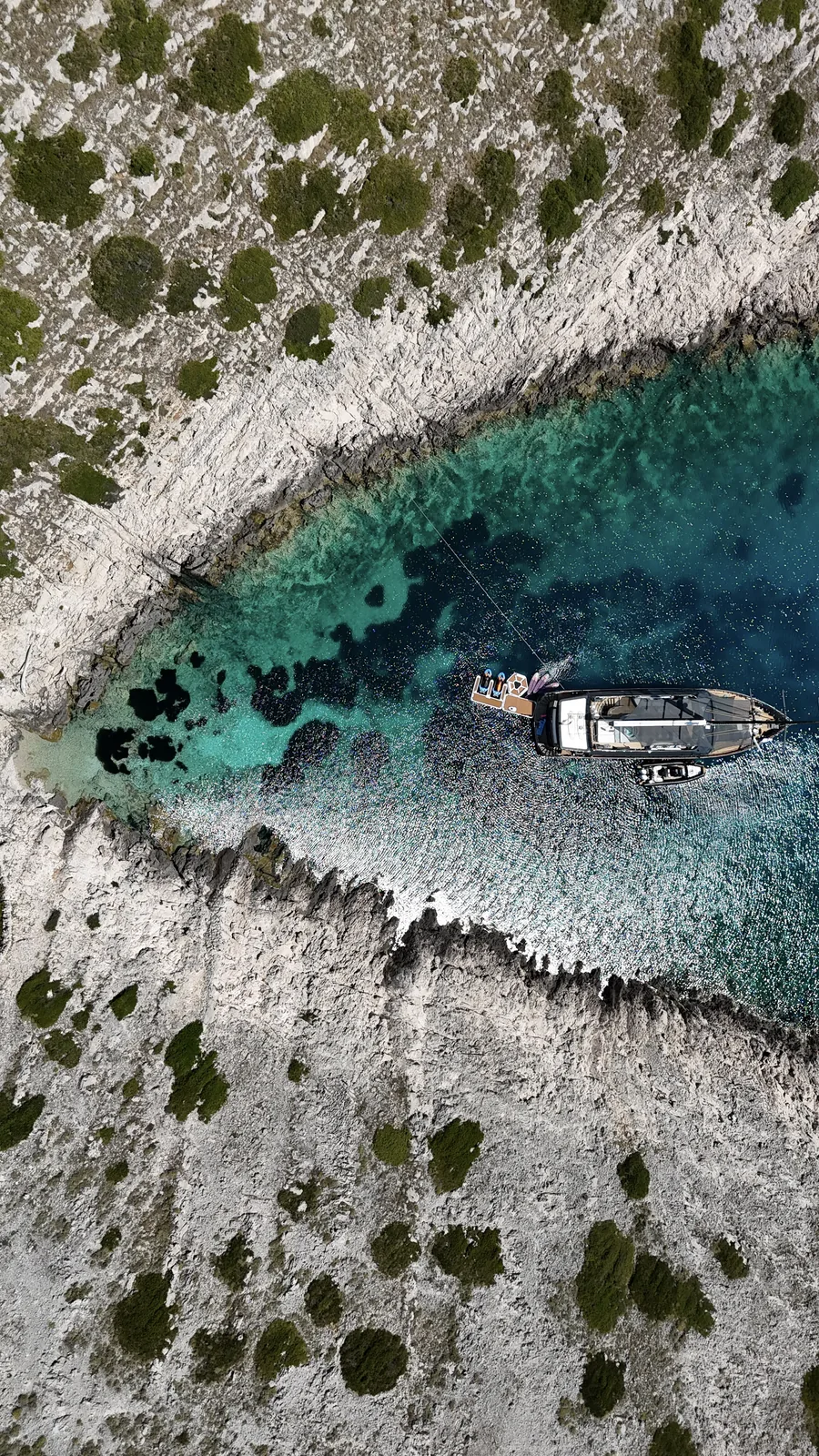
The distances are also surprisingly short. On a typical seven night route you are not spending six or eight hours a day underway. Most legs between islands take from about an hour to three hours at a relaxed speed, and the longest crossing of a week, out to Lastovo, takes around four and a half hours. That leaves the bulk of your day at anchor in a calm cove for swimming, tied up stern to in a harbour, or resting overnight in a protected bay where the water barely moves.
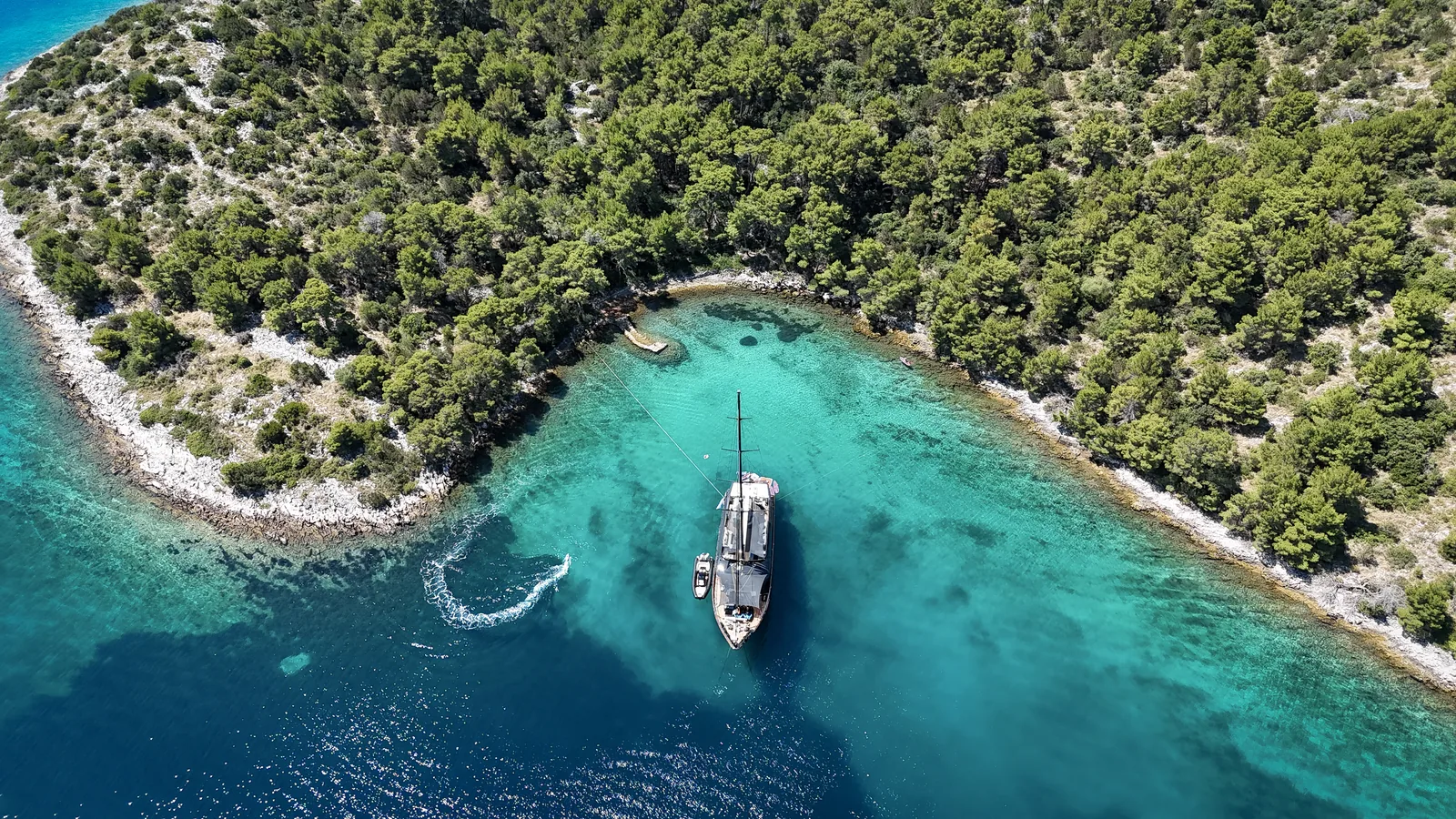
For someone who worries about motion sickness or too much time on the water, this rhythm makes a big difference. You are on the move for only a small part of the day, mostly in protected water with land clearly visible on every side.
What a Professional Crew Handles Before You Even Notice
One of the biggest sources of stress for people considering a first sailing trip is responsibility. On a bareboat charter, where you rent the boat and skipper it yourself, you are the one constantly watching the sky, checking depth charts, working out anchor chain lengths and worrying about where to tie up if the wind picks up overnight.
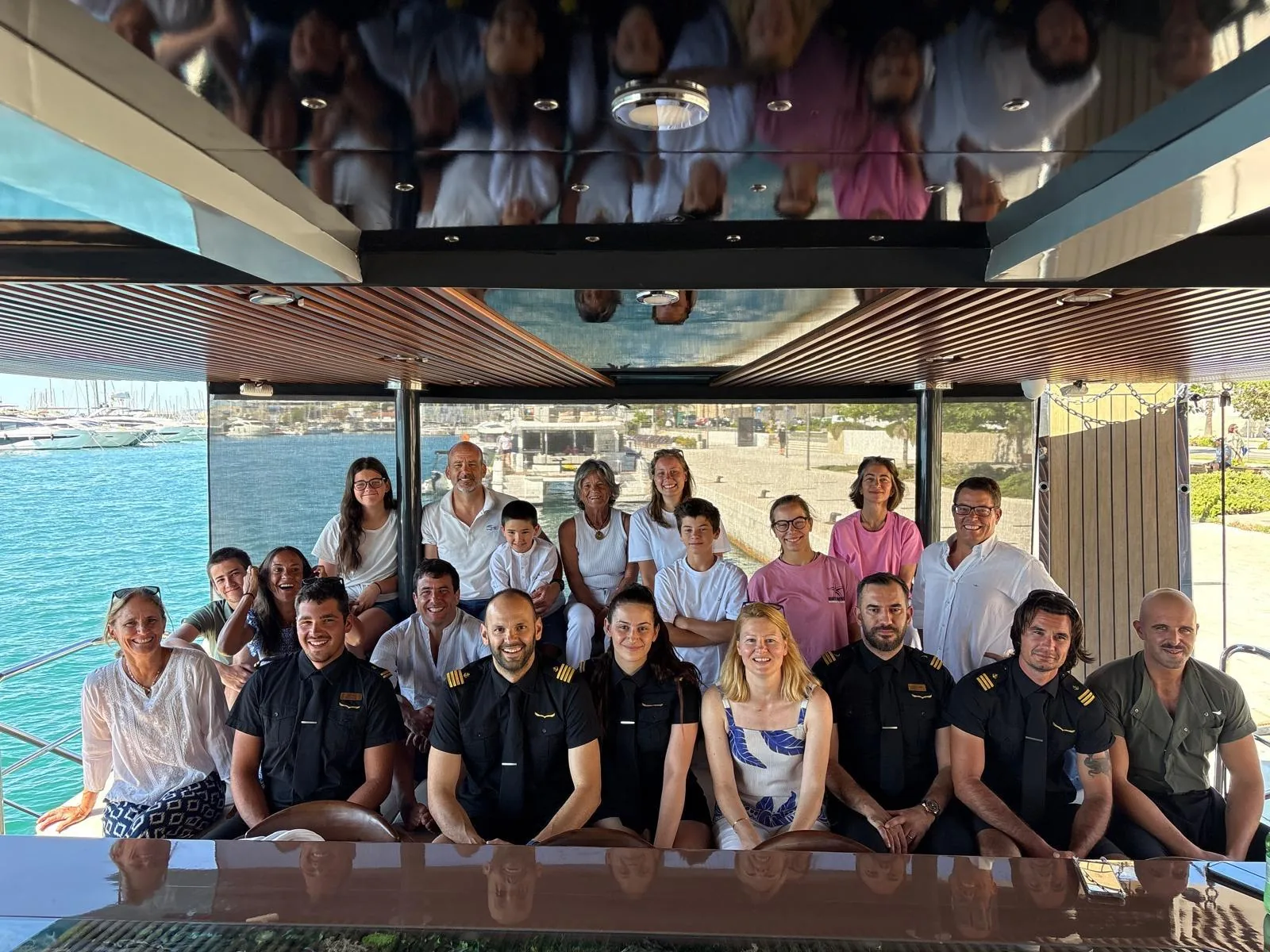
Choosing a crewed yacht charter means you never have to read a forecast or make a single navigational decision. Before you wake up for your morning coffee, the captain and crew have already done the quiet operational work that keeps the week running smoothly.
Weather watching, every day
Every morning, and several times through the day, the captain reviews more than one marine weather forecast and the local coastal reports. The bridge stays tuned to VHF channel 16 and the working channels for coast guard updates, marina and harbour advisories and reports from other captains in nearby channels.
Safety equipment and regulations
Commercial charter yachts in Croatia are regulated and inspected, and they carry the safety equipment the rules require, including life jackets for adults and children, life rafts, firefighting equipment, radar and modern navigation electronics. On the first day aboard, the crew gives a short orientation so everyone knows where the life jackets are stored and how the basic safety procedures work, without turning your holiday into a lecture.
Mooring and anchoring
When the yacht enters a harbour or drops anchor in a secluded cove you do not touch a single line or fender. The deckhands handle the stern to mooring, check that the anchor is holding on the seabed, and keep an eye on it if conditions shift during the night. Your only job is to decide between another swim before lunch and a glass of wine on the sundeck.
What Happens If Something Goes Wrong
No crew can control the weather or promise that nothing will ever go wrong. What a crew can do is be ready, so help is never far away. The captain has direct radio contact with Croatian coastal rescue, and in an emergency at sea the national sea search and rescue number is 195, while 112 is the European emergency number that works along the whole coast.
The Bura and Jugo Winds: What They Are and How Captains Plan Around Them
If you read anything about sailing in Croatia, you will come across the names of two local winds: Bura and Jugo. Understanding what they are and how a professional crew deals with them takes away most of the mystery around Adriatic weather.
The Bura
The Bura is a dry, cool wind that blows from the northeast, pouring down from the coastal mountains toward the sea. It brings clear skies, bright sunshine and high visibility, but it arrives in strong gusts that can chop up the water in exposed channels. It is most common from autumn to spring, so it is less of a feature of a July week, and in summer it usually blows through in a day or overnight. Because the Bura comes off the mainland, the side of an island facing away from it is in the lee, and bays there stay far calmer.
The Jugo
The Jugo is close to the opposite. It is a warm, humid wind that blows from the southeast along the length of the Adriatic. Instead of sudden gusts, the Jugo builds gradually over two or three days, bringing overcast skies, rain and long rolling swells. Because it develops slowly, captains see it coming days ahead on every marine weather forecast. It is the wind that most often changes a plan.
The summer wind: the Maestral
In July and August the wind most guests actually meet is neither of those. It is the Maestral, a steady sea breeze from the northwest that usually builds around midday and eases toward evening. It is one reason longer crossings are often planned for the morning, when the water is at its calmest.
How a captain plans around the wind
Neither wind has to cancel a charter, provided you have local knowledge on board. Every Dalmatian island has bays facing different compass points. When a Bura blows from the northeast, the captain tucks the yacht into a cove shielded from the north. When a Jugo builds from the southeast, the yacht moves to an anchorage protected by high ground to the south.
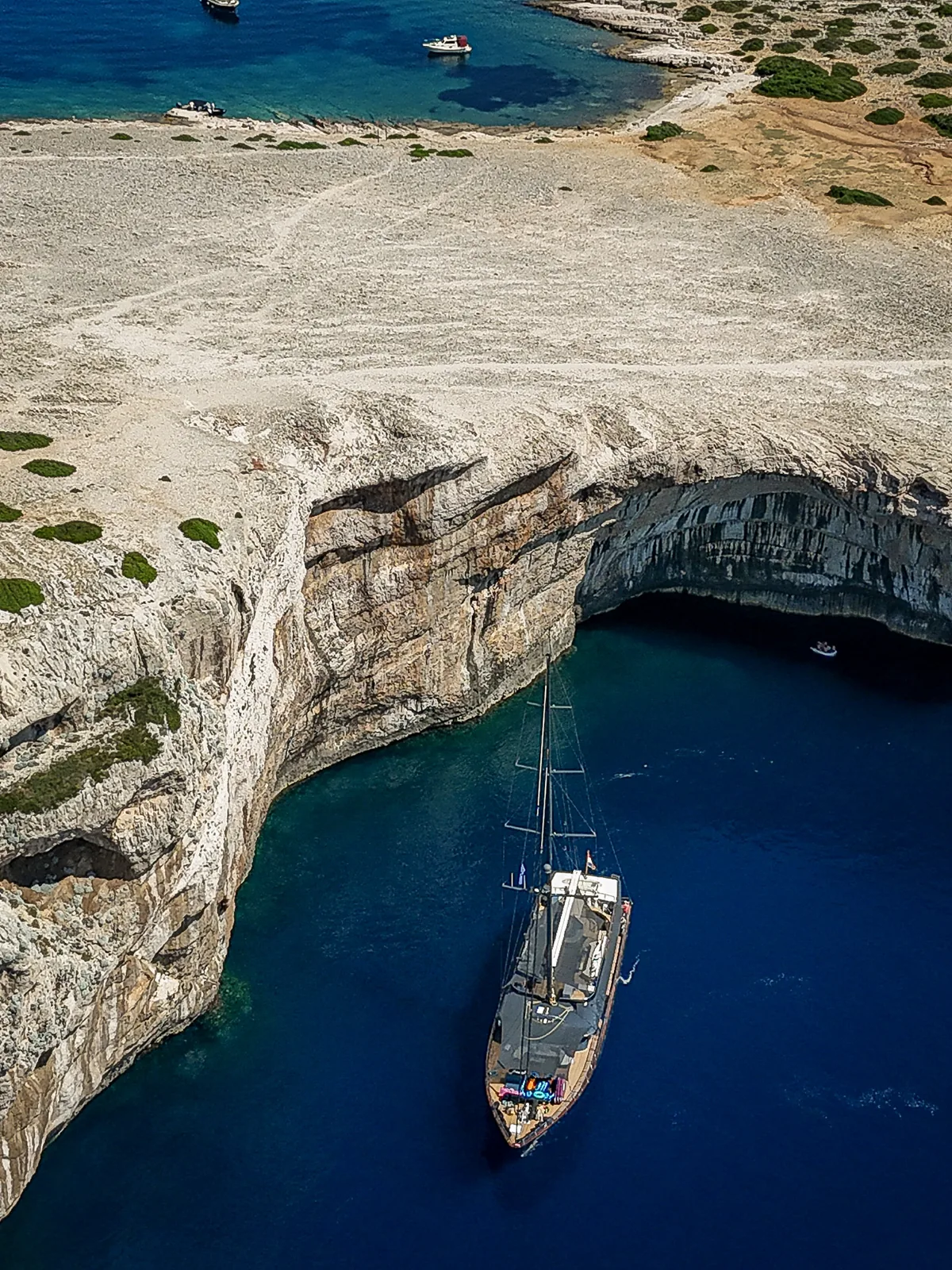
This is the main reason a flexible itinerary is safer and more comfortable than a rigid timetable. Instead of pushing into uncomfortable waves to reach one of the busy marinas on a strict schedule, a private charter adapts its daily stops so you wake up, swim and sleep in calm waters. Our seven night route from Split shows where the route changes when the wind does.
What This Means for Families and First-Timers
If you are travelling with young children, older parents or a partner who is nervous about a week on the water, the size of the yacht makes a noticeable difference compared with a smaller sailboat.
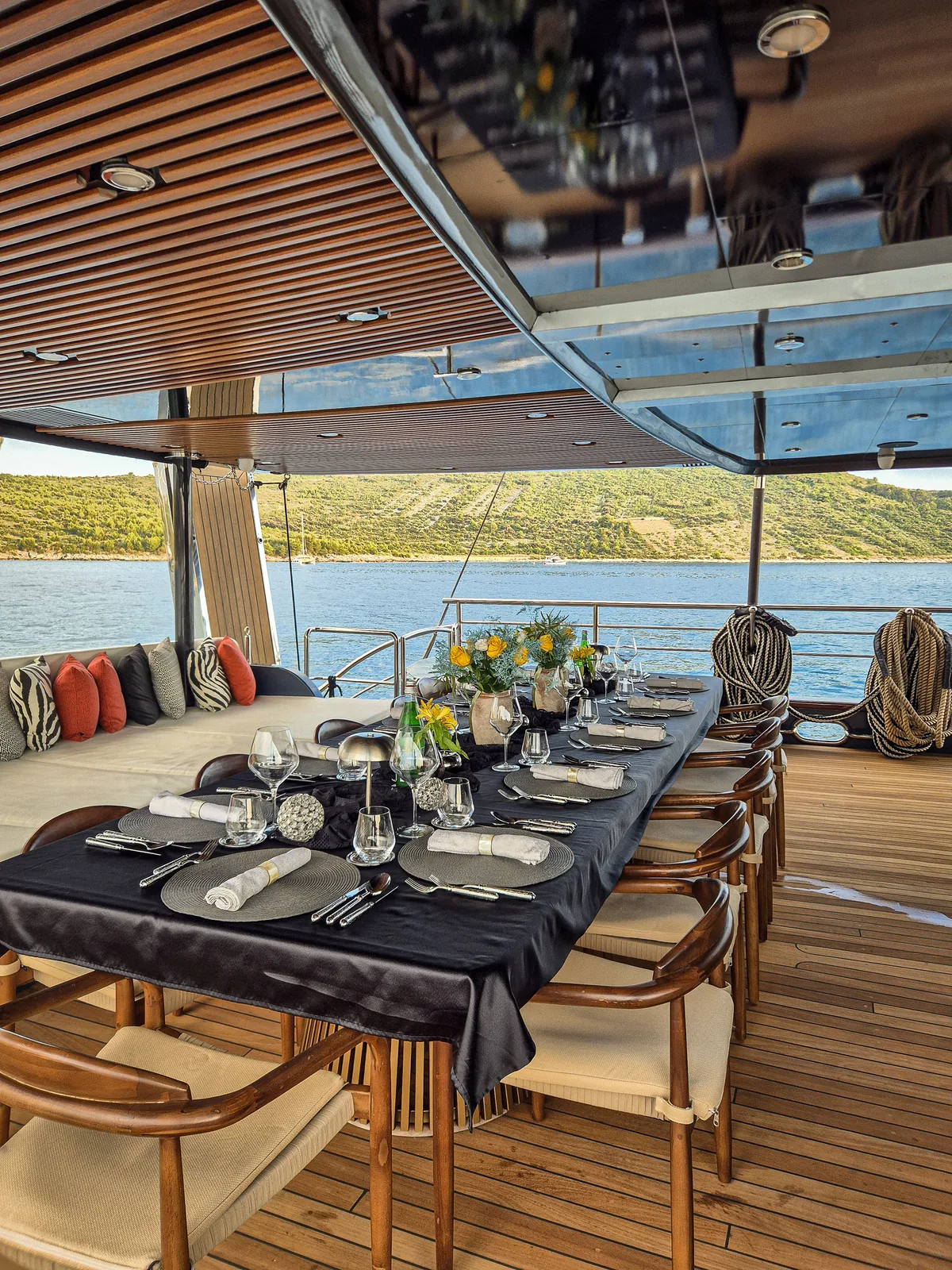
Size and weight play a major role in comfort. A 37 metre steel-hulled yacht is steady underfoot and does not bounce sharply over small harbour wakes. Walkways are wide, guardrails are solid and moving between the salon, cabins and sundeck feels natural even for guests who have never stepped aboard a boat. For parents, knowing that children have secure deck space and life jackets in the right size on hand removes a layer of daily worry. Our guide to sailing holidays in Croatia for families goes into what a week looks like with children.
Seasickness is another common concern, especially for the partner who did not suggest the trip. Because the legs are short and the channels sheltered, motion sickness is far less common in Croatia than people expect. On the rare occasion when a channel feels lumpy, the captain adjusts the schedule, waiting an hour for the sea to settle or taking a protected route behind an island, so nobody spends the afternoon feeling green. If you or someone in your group is prone to it, tell us when you enquire and the first days can be planned short.
Is Croatia safe for a first sailing trip? A safe and enjoyable week on the Adriatic comes down to planning, local knowledge and a crew that checks the weather so you do not have to.
Tell us your dates and we will confirm availability.
Check your datesFrequently Asked Questions